

Six Minutes
On the dark side of wonder — and its silver lining

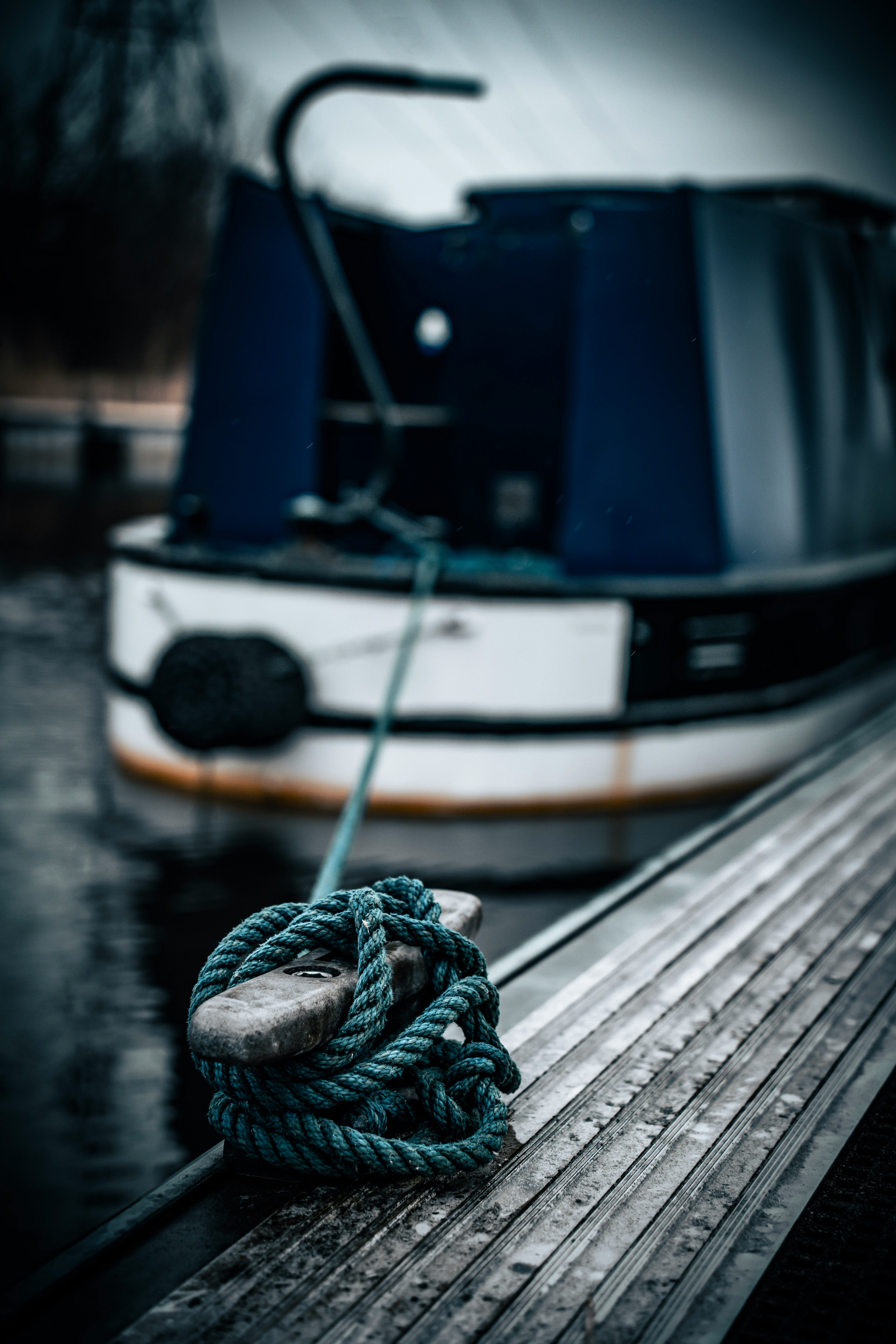
I watched a man’s home vanish in less than six minutes. That’s all it took from when someone raised the alarm that my neighbour Chris’s barge, Mariposa, was sinking to when it was fully submerged.
As a small handful of us stood on the pontoon in helpless disbelief, we heard the dogs barking. Oh god. Chris has two dogs, Marley, an elderly lab, and DJ, a sprightly Pomeranian.
Before I could even process what was happening, another neighbour, Dan, had flung himself into the listing barge — the water waist deep at this point — and headed into the flooded inner cabin. “The water is coming in too fast with the door open,” he yelled back at us on the mooring. “Close the door behind me so I can grab them.”
In that moment it didn’t occur to us — the insanity of sealing a man inside a sinking ship. You don’t really think about these things as they are happening. So we pushed the door closed against the weight of the water, and Dan disappeared into the darkening space, leaving only the sounds of the frightened dogs and his voice coaxing them out.
“I’ve got the big one!” Dan finally cried, after what felt like an eternity.
By this time another neighbour, Robyn, had hopped into the stern, and the two of us began prising the door open against the rushing water. First a yellow snout emerged, then a head, as Dan began heaving very cross, very confused, very wet hounds into the waiting arms of Robyn, now crouched in the flooded wheelhouse, and then to myself on the pontoon. In a soggy flurry, all living creatures exited the barge.
Within moments, the 53ft barge began to take the entire pontoon under. Wood and rope groaned under the strain, water lapping over the floating structure. Then a sound like a gunshot — the snapping of Mariposa’s mooring line, thick as my thumb. Without that to hold the thirty-ton vessel, all there was left to do was watch.
Three minutes later, the boat was gone. All that made Chris’s house a home lay at the bottom of a marina that has welcomed barges since 1770. All in less time than it takes to boil a kettle.
I have never felt so incapable. So helpless. So sick.
Then it fell to me to call him and share the news. I didn’t know any way to soften the blow, so I just told him outright. The dogs are saved, but your home is gone.
Since moving onto a barge last year, we’ve had our own moments of forgetting and then remembering that we live on the water. The feel of the house shifting in heavy wind. The haunted creaking of the boat at night. A lost grip while doing DIY ending with a tool in the drink instead of on the ground.
But this was a different recognition — of the vulnerability of our chosen life on the water. And there was another realisation, too: that this precarity creates a camaraderie and solidarity unique to those who share it.
Wonder can come from seeing people do selfless things. It can also come when confronted with the fragility of life.
The dark side of wonder
Wonder may seem like a universally positive emotion, but history tells a different story. Look far enough back into the word itself and fear was always part of the equation. Depending on which dictionary you read, wonder has as many as eleven definitions as both noun and verb. Its roots run through the Greek teras and the Latin miraculum, both meaning miracle, and the Germanic wundran, likely taken from the Old Norse undr, “to surprise”.
The University of California’s Lisa Sideris calls wonder an “umbrella term”, and points to a darker root. “Some accounts suggest the German, wunder, that traces it to wound — that element of awe that can open you up in a kind of terrifying way and expose you, or make you vulnerable, but then many good things can come from that kind of vulnerability.”
Like the twins of Gemini, wonder has always had two faces — the majestic sigh of a perfect sunset paired with the horror of an impassive hurricane.
Even darker awe, I’ve come to appreciate, does something extraordinary to us. Across a series of studies, researchers have found that awe reliably shrinks our sense of self. People who feel awe, sometimes from nothing more elaborate than standing in a grove of tall trees, feel smaller and less self-important, and then, in turn, behave more generously, more honestly, more willing to put themselves out for a stranger. Researchers call this phenomenon the “small self”.
I felt it. In the face of something so much bigger than me, the usual anxious chatter of my own concerns simply went quiet, and the only thought that remained was that my community needed help.
Silver linings
The reality is that most wonder is nothing like a sinking barge. Researchers estimate that only 20-30% of awe experiences involve any sort of threat. But of those who have experienced threat-based awe, 69% described what researchers called “silver linings” — glimmers of humanity amidst the tragedy. Threat-based awe makes us feel helpless and strips away our sense of personal control, but silver linings hand a little of it back, and with it, a measure of resilience.
We watched this play out on a global scale during the pandemic. COVID-19 was a textbook case of threat-based awe. Vast, overwhelming, impossible to grasp, yet threaded with silver linings in the collective response of health care workers and whole communities. Its sheer scale provoked the “small self” and nudged people towards problem-focused coping: washing hands, wearing masks, checking on neighbours. Wonder may feel like a solitary emotion, but it is socially bonding by nature, and those small acts of altruism and self-sacrifice, born of something frightening, still carried the seed of resilience and hope.
I think that is what I witnessed unfolding on my pontoon. Threat-based awe with its silver lining arriving almost in the same breath. There was no plan. Dan simply went into the cabin, Robyn into the stern. The dogs came up wet and cross and alive. For a few minutes, a handful of very independent-minded people became a single, purposeful thing — and the smallness I felt in the face of that sinking barge was the very thing that turned me outward. Towards Chris, towards his dogs, towards the people beside me on the mooring, towards the community we share.
The particular grace of a life on the water
There is a prevailing narrative about how humans behave in a catastrophe. That we are inherently selfish creatures, that the veneer of civilisation is thin, that panic and looting are only ever a few minutes away. But research shows quite the opposite. In an emergency, people overwhelmingly turn towards one another, and the bonds forged in the worst hours persist, making communities stronger. Precarity, rather than breaking us apart, often binds us more closely together.
I have come to realise that life on the water makes this precarity especially visible. Of the roughly thirty-five thousand licensed boats on Britain’s network, around one in five is somebody’s home, and your home, when afloat, is not an inert thing you inhabit but a creature you must continually tend, exposed to weather and water and your own small lapses of attention.
Precarity, it turns out, is exactly the soil in which these kinds of bonds grow. The people with the least buffer against disaster are consistently the ones who give the most freely — not despite their exposure but because of it. When your way of life reminds you every day that you are not in full control, the neighbour who will leap into a sinking ship to save your most cherished possessions or take a wet dog into her arms without being asked, stops being a nicety and becomes the rigging your life depends on.
When I think about those six minutes now, the word I keep returning to is wonder. Not because it was beautiful. It wasn’t. It was one of the worst afternoons I can remember. But wonder, properly understood, isn’t only about beauty. It is what happens when the world becomes suddenly, undeniably larger than the account we were keeping of it. Sometimes that largeness arrives as a temple roof or a pond full of water lilies. Sometimes it arrives as a man’s home going under in six minutes, and neighbours who do not hesitate.
Both leave you smaller. Both leave you a little more inclined, afterwards, to turn towards the people around you. The dogs are safe. The home is gone. Chris will rebuild his life. And the community that reached into the water for those two frightened animals is, I understand now, the most durable thing any of us out here on the water can actually possess.
With wonder,

Copyright ©2026 Monica C. Parker. All rights reserved.