

Muscle Memory

The Muscle Remembers
On the people and places that live in our bodies
There is a particular kind of memory that doesn’t live in the brain at all.
When you train a muscle hard enough to make it grow, the fibres respond. They recruit new nuclei — the tiny command centres that run the cell — and fuse them in. But the astonishing part is what happens when you stop training. The muscle shrinks back to its ordinary size, and for a long while it looks as if you had never worked out in the first place. That all your gains were lost. But in truth, those extra nuclei stick around and stay stable for at least fifteen years. Some say even for life. So the next time you ask that muscle to grow, it grows far faster than a muscle being called into action for the first time. The body keeps a record of how strong it once was, even when we forget it ourselves.
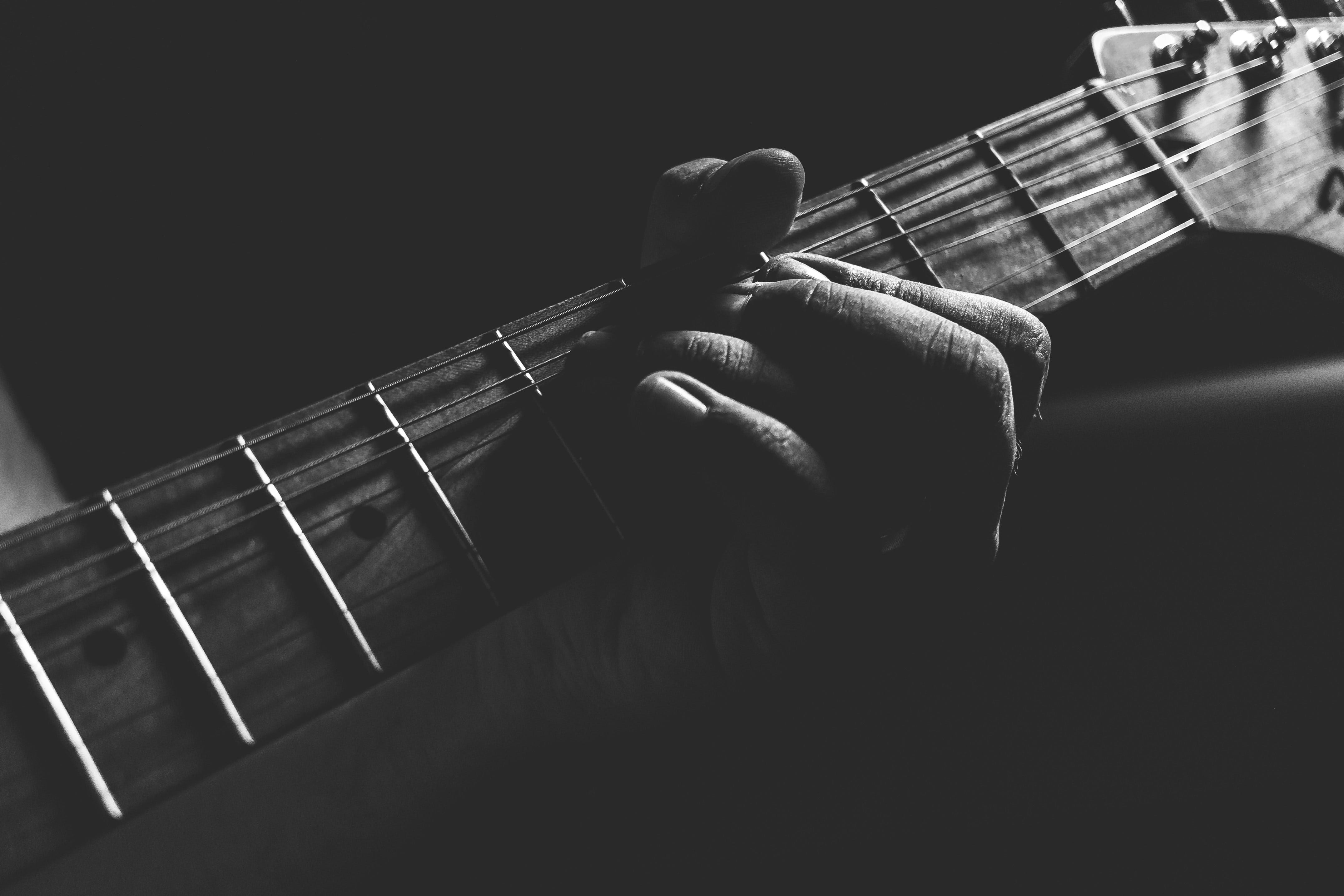
We call this muscle memory, and we usually mean something inconsequential by it: the way your hands still find the chords on the fret or how you never quite forget how to ride a bike. But as I have spent the last few weeks moving between remembrances, I have come to think the phrase is far more literal, and far more tender, than we might imagine. The people we love and the places that hold us are not filed away somewhere in our memory banks as mere data points. They are fused into us — an interwoven part of our psychic fascia — long after we have physically left those people and places, waiting to be called back into use and remind us of our forgotten strength.
The Half That Stays
A few weeks ago, I sat at my father-in-law’s funeral and watched his wife of sixty-five years come to terms with the loss of, quite literally, half of herself.
Sixty-five years. Think about what that does to two nervous systems. Researchers who study long-married couples have found that their bodies slowly fall into step with one another — heart rates, breathing, sleep cycles, even the stress hormones that rise and fall across a day. After enough decades, two people are no longer fully running their own physiology. They are co-regulating, each one a pacemaker for the other. Her body had spent two-thirds of a century learning the precise weight and warmth and rhythm of him. He was not only a person she remembered. He was a function of her own anatomy.
Which is why bereavement is never only an emotional event. It is a physical one. Scientists call it the widowhood effect — the well-documented rise in a surviving spouse’s own risk of dying in the period after losing their partner. The heart, asked to regulate alone for the first time in decades, sometimes simply cannot find the rhythm on its own.
And yet, watching her, I kept returning to those retained nuclei. Sixty-five years of him are not gone from her. They are fused in. Load-bearing. A permanent scaffolding built from love. The grief is so vast precisely because the love was so painstakingly constructed over time — and that structure does not vanish the moment the load is removed. It persists — the very thing that will save her, or crush her. It is the truest and most heartrending kind of muscle memory there is.
Designed to Hold a Person
From the funeral I travelled to Amsterdam for a conference, the concept of muscle memory flitting through my brain as I landed into at the all-too-familiar Schiphol.
I once came within a signature of renting a flat at 77 Vondelstraat — Oud Leyerhoven, the redbrick villa Pierre Cuypers built for himself and lived in, on the street he master-planned and named. Cuypers, the Dutch architect whose works, such as the Rijksmuseum and Centraal Station, defined the city’s aesthetic heart, had given the house its best rooms at the back, overlooking the Vondelpark. It had been the architect’s home, then a music school, then flats — a whole succession of lives held in the same rooms before it nearly held mine.
Cuypers pursued what the Germans called the Gesamtkunstwerk, or ‘the total work of art’ — the philosophy that a building’s outside and inside should be one continuous, deliberate, embodied feeling, and that the architect was responsible not merely for the walls but for the experience of being held inside them. I never did move into that house — I moved to London instead — but I return to that idea constantly: that a place can be designed to hold a person. And in a way, a person can be designed to hold a place too.
Despite not moving there, it is a place that still holds me, is still part of my scaffolding. Amsterdam gave me my husband. We both lived in London but worked for Dutch firms, and it was those firms that introduced us to one another. Environmental psychologists call this place attachment — the way certain locations stop being mere coordinates and instead become part of our sense of self.
The body learns a city the way it learns a dance. I fall into a familiar jig as I absorb the pewter-green shimmer of the canals, the urgent dinging of bicycle bells, the cobbled geometry of a street walked a hundred times. I can land in Amsterdam after years away, and my feet know where to go for my bitterballen and Vlaamse frites before my mind has even caught up. Like muscle memory, the city is fused into me, and when I return, I grow back into the person I was there — hungry for new experiences, seeing everything through fresh eyes.
The Place That Took Me In
After Amsterdam, I travelled to an idyllic little island called Lusty Beg, in County Fermanagh, reachable only by chain ferry. I was there for another conference, this one put on by a group of women who I’ve grown very close to over more than ten years working together.
I first moved to Belfast seventeen years ago to do my master’s degree, having just left an abusive marriage. I arrived, if I am honest, atrophied. Shrunk down to almost nothing, unsure how much of me was even left, and questioning if it would be enough to succeed. It was as though my psyche was an Olympic-sized pool that had been emptied one teaspoon at a time. So many small removals that went unnoticed until I suddenly discovered I was empty.
Northern Ireland is where I came to escape. To refill. It is the place that took me in when I had the least to offer and asked for nothing in return except that I stay long enough to become myself again. I rediscovered my joy of learning, graduating first in my class. I dated a much younger man who reminded me of the forgotten frisson of infatuation. I made lifelong friends who have grown from fresh-faced grads into people with families of their own.
And Ireland granted me a network that changed the trajectory of my life. I met authors who strengthened my belief in myself. I saw speakers who bettered my skills. I built a circle of women who act as my personal board of directors, guiding, supporting and commiserating. Now I am returning to do my PhD, and despite some nervousness, I feel the muscles of my past Belfast days firing again. I left it strong and used that growth to create a life I still pinch myself about. I am not starting from nothing now; I am just retraining a muscle that already knows what I am capable of becoming.
Nothing Is Ever Lost
Lately, with deaths and changes and liminal spaces, I have felt myself shrinking again, but here is the stubborn hope I have been carrying over these last few weeks.
The feelings these places and people triggered — belonging, nostalgia, growth, gezellig — are as alive as they ever were. They remind me that a muscle built long ago and then lost over time does not begin from zero when you ask it to grow again. It comes back faster, because the infrastructure was never dismantled. The nuclei lie dormant, not destroyed. I may only see these friends once a year, but the muscle memory of our friendship responds when we are back together. We leave a few hours or a few days later with stronger sinews between us all, ready for the fused nuclei of our companionship to respond when activated in another year or so.
We tend to grieve change as deletion. We leave a city, a marriage, a self, a person — and we mourn it as though it has been erased. We are saddened to leave a friend when we don’t know the next time we’ll see them. Even more so as we come to realise that no day is guaranteed. But the body keeps better records than that. The people who shaped us, the places that held us, the strength we built and were certain we had lost — none of it is gone. It is fused in. Retained. Load-bearing. A widow carries sixty-five years inside her chest. A city dances back into your feet the moment you return to it. A place that once received you at your lowest still holds the shape of the healed you, waiting for you to return and grow again.
As Maya Angelou wrote, “The ache for home lives in all of us. The safe place where we can go as we are and not be questioned.” I have come to believe that safe place is not so much out there in the world, waiting to be found, but rather something we build inside ourselves. Nucleus by nucleus, built from every person and every place we were ever strong enough to love.
So if you are between places or people this week — leaving one, returning to another, quietly mourning a third — let me give you this: nothing that ever made you strong is truly lost. It’s still there inside you. And the next time you are faced with the need to call it back into duty, you will be greeted with the familiar strength you had long forgotten.
The muscle remembers. So do we.
Apologies for any confusion, as it appears not everyone received the newsletter yesterday. Not sure what happened, but if this is a duplicate for you, consider it a bonus!
With wonder

,