

Wonderbringers Newsletter with Monica Parker

View this email in your browser

Hello Wonderseekers!
I shared with you all last week that my favourite aunt passed away, and I read the small portion of my book that she featured in. As I was flipping through the book, I found myself re-reading the chapter on resilience and recalled some of the conversations I’d had when writing it.
One bit that really struck me was my interview with Dr. John Leach. Dr. Leach is a British academic and expert in disaster situations—things like plane crashes, shipwrecks and hostage-taking. He analyses the decisions we make just following the crisis stage of a disaster and then offers guidance on appropriate emergency response and training. One thing he observed is that immediately following a crisis, our brains shift automatically from thinking machines to feeling machines. Our prefrontal cortex, which is charged with our executive functioning and critical thinking, goes offline while our more ancient wiring fires up, triggering our freeze, fight, or flight responses. This is why emergency routines are so important (and why we have to hear the safety briefing every time we fly on a plane); because they help us execute processes on autopilot despite our executive functioning cowering in a corner.
After a while, those reactive triggers quiet down, and we can get our executive functioning running again, but it takes time. He found the key to survival is twofold. the first is following good emergency response routines, which get you to safety while escaping the immediate threat. The second is finding some sort of meaning and purpose which helps you regain your cognitive flexibility.
After examining hundreds of disaster situations, Leach found that the key differentiator between those who lived and died wasn’t intellect or injuries but those who simply chose to persist. This was a known phenomenon of PoWs during World War II; the Japanese called this bura-bura or “do-nothing-sickness”, and Americans called it “give-up-itis.” The key to survival is to do something—anything— with purpose, rather than succumbing to the overwhelming prospect of survival in this new, terrible existence.
Philosopher and author Viktor Frankl spent his life trying to make sense of his horrifying experience as a Nazi prisoner of war and holocaust survivor. He believed “striving to find meaning in one’s life is the primary motivational force in man.” For Frankl, meaning was of the existential, “capital M” sort. But Leach says it doesn’t have to be so grand. It can be a more pedestrian sort of meaning.
When I left my abusive marriage and moved away, the first thing I did was adopt a dog. There was some nervousness from family and friends that I wasn't quite ready to take on such a long-term commitment—I was a pretty broken human—but somewhere in my mind, I knew I needed a reason to get up every morning. At that point, my intrinsic motivation had been entirely depleted, but my pup Josephine (named after St. Joseph, the healer) gave me the extrinsic driver to put one foot in front of the other. She was meaning enough for me to stay afloat while I slowly rebuilt my life.

There are a lot of people who feel crushed right now. Crushed by a diagnosis or a death. By fear of the future or memories of the past. People who are depleted and devastated and disheartened. The route to survival is first to choose it, and then to pursue it with purpose, even if the purpose is no greater than making sure your furry friend doesn’t have an accident on your carpet.
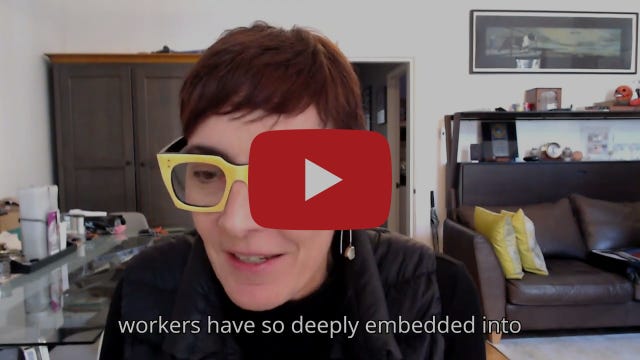
Below is little tidbit about why healthcare workers are the most likely to survive a disaster.
Some wonderbringers for me this week:
Listen: Life Solved podcast: How to survive a zombie apocalypse.
Yes to life, in spite of everything: Viktor Frankl’s lost lectures.
Watch: TED Talks to help you find your purpose: Not sure what to do with your one precious life?
On the topic of purpose, I will be putting together a vision board session for January 2025. I am still debating if it will be live or on-demand, but if you are interested, shoot me a message so I can put you on the list for future info.
With wonder,


Follow Me


Why am I getting this email?
Good question!
You’re getting this email because you are on HATCH Analytics’s or Monica Parker’s mailing list.
If you don’t want to receive these emails, you can unsubscribe at the bottom.
(We do hope you stick around, though.)
Copyright ©*|CURRENT_YEAR|* Monica C. Parker. All rights reserved.
Want to unsubscribe? That’s ok! We’re sad to see you go, but you’ll still be a part of our Wonderbringer community in spirit.
Mailing address:
10 Colosseum Terrace
London, UK NW1 4EB